
0086-13812610917


A chimney system is not complete with straight pipes alone. In real buildings, flue routes must pass around beams, through walls, across roof structures, and above rooflines. They need support, direction changes, termination protection, inspection access, and fire-safe transitions. This is where chimney flue accessories become essential.
Accessories such as 90-degree bends, 45-degree bends, tees, wall brackets, roof brackets, fire-protection rings, fire stop shells, adapters, rain caps, and support plates determine how well a chimney system fits the actual project site.
For manufacturers, distributors, and contractors, accessory compatibility is often what separates a simple pipe supplier from a complete chimney system provider.
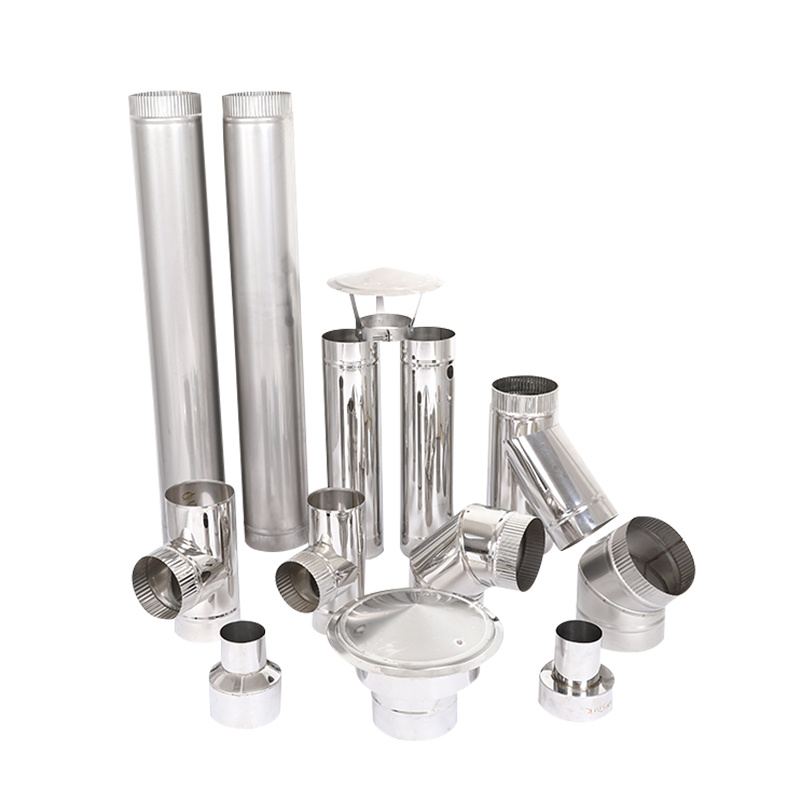
A chimney route rarely runs perfectly straight from appliance to roof. It may need to change direction, pass through a wall, connect to an appliance outlet, transition from single-wall to twin-wall pipe, or be supported along an exterior wall.
If the right accessories are missing, installers may cut, modify, or force-fit components on site. This can reduce safety, appearance, and long-term reliability. A complete accessory system helps keep installations standardized and predictable.
Bends are used to change the direction of the flue route. A 90-degree bend creates a sharp direction change, while a 45-degree bend provides a smoother offset.
In chimney and ventilation systems, bends are useful when the pipe must avoid structural obstacles or connect from an appliance to a vertical flue. However, every bend adds airflow resistance. Too many bends can reduce draft performance and increase soot accumulation.
This is why installers should plan the route carefully and use bends only where necessary. When possible, smoother offsets and shorter runs can help maintain better ventilation performance.
A tee is often used in pellet stove, wood stove, and exterior chimney installations. It allows a horizontal appliance connection to turn upward into a vertical chimney route. Many tee designs also include a removable bottom cap for cleaning access.
This is important because soot, ash, and condensate can collect at low points. A cleanout tee makes inspection and maintenance easier, reducing the need to disassemble large sections of the flue system.
For export chimney kits, tees are among the most important accessories because they improve both installation flexibility and serviceability.
A chimney must be mechanically stable. Outdoor vertical chimney sections are exposed to wind, vibration, thermal expansion, and weather. Wall brackets and roof support components help secure the flue system to the building structure.
Poor support can lead to pipe movement, joint stress, noise, leaks, and long-term deformation. Proper bracket spacing and correct fastener selection are essential for safe installation.
For distributors, offering matching brackets with chimney pipes reduces compatibility problems and helps installers complete projects more confidently.
When a chimney passes through walls, floors, ceilings, or roof structures, fire protection becomes a critical issue. Fire-protection rings, fire stop shells, and related transition parts help create safer separation between the hot flue and nearby building materials.
These components should be selected according to flue type, diameter, building material, and local installation requirements. They are especially important in wood-frame homes, cabins, villas, and insulated wall structures.
For buyers, fire-protection accessories are not optional decorative items. They are part of the safety strategy of the full chimney system.
Adapters help connect different parts of a heating system. For example, a stove outlet may need to connect to a chimney pipe with a different diameter or wall structure. An adapter can provide a stable transition and reduce the need for on-site modification.
Well-designed adapters improve installation speed, appearance, and system integrity. For OEM customers, custom adapters may also be developed to match specific stove models or market requirements.
A full chimney accessory range gives buyers several advantages.
It improves installation flexibility.
It reduces mismatched components.
It supports cleaner project design.
It helps create safer wall and roof transitions.
It improves maintenance access.
It increases the value of complete chimney kits.
It makes wholesale inventory more attractive to installers.
Instead of selling only chimney pipes, suppliers who provide full accessory systems can serve distributors, fireplace brands, pellet stove manufacturers, and contractors more effectively.
International buyers should check whether accessories are designed as a system. A 90-degree bend, tee, bracket, or rain cap must match the pipe diameter, locking system, wall structure, and finish.
Important purchasing details include:
Diameter range.
Material grade.
Single-wall or double-wall compatibility.
Connection method.
Surface finish.
Accessory type and quantity.
Packaging method.
OEM branding requirements.
Spare parts availability.
For retail and wholesale markets, labeling and assembly instructions are also important. Clear product identification helps reduce installation mistakes and customer service pressure.
Chimney accessories are used in:
Wood stove installations.
Pellet stove venting systems.
Fireplace chimney systems.
Commercial heating projects.
Roof and wall chimney exits.
Exterior chimney routes.
Villas, cabins, and modular homes.
Replacement and repair markets.
OEM heating appliance kits.
Their purpose is to make chimney systems easier to install, safer to operate, and more reliable over time.
Chimney flue accessories are not secondary products. They are the parts that turn straight chimney pipes into complete, installable, and maintainable ventilation systems. Bends solve routing problems. Tees support cleaning access. Brackets provide stability. Fire-protection rings and fire stop components improve safety at building transitions. Rain caps protect the flue from weather and debris.
For buyers seeking stainless steel chimney systems, a supplier with a complete accessory range can provide greater value than a pipe-only manufacturer. A well-matched accessory system reduces installation risk, improves customer satisfaction, and supports long-term chimney performance.
Tags:chimney flue accessories, stainless steel chimney bend, chimney tee, chimney brackets, fire protection ring, fire stop shell, chimney flue kit










Copyright © 2026 Suzhou Ruilun Metal Products Co., Ltd. Keywords:Stainless Steel Chimney,Chimney Fireplace,Stainless Steel Chimney Parts


 You are here :