
0086-13812610917

A wood stove chimney system is not just a vertical pipe above a stove. It is a complete route for combustion gases, heat, moisture, soot, and airflow. For homeowners, installers, wholesalers, and stove brands, the quality of a chimney flue kit affects installation efficiency, draft stability, long-term maintenance, and user confidence.
A complete chimney flue kit normally includes more than straight pipe sections. It may require elbows, tees, adapters, wall brackets, roof supports, fire stop components, rain caps, locking bands, and customized transition parts. Each component has a specific role. When these parts are selected as a matched system, installation becomes cleaner and safer. When they are mixed without compatibility, problems often appear on site.
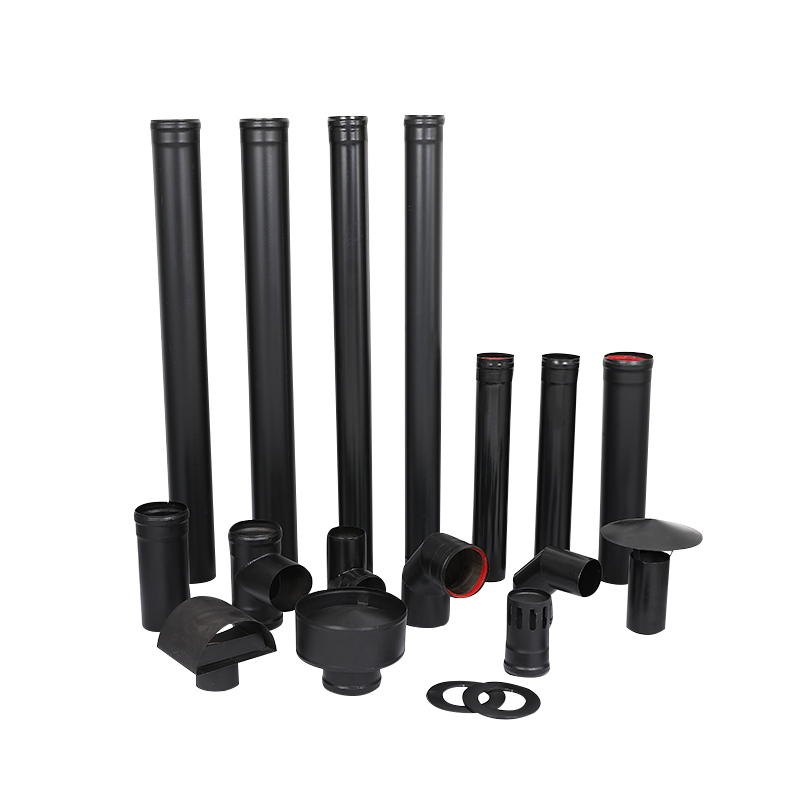
Many buyers focus only on the pipe diameter and material. These are important, but they are not enough. A chimney route must connect the stove outlet, pass through walls or ceilings, turn around structural obstacles, extend above the roofline, and remain stable under wind, temperature changes, vibration, and cleaning operations.
This is why a chimney flue kit should be designed as a system. The pipe, bend, tee, bracket, cap, and fire-protection parts must work together. If one component does not match, the whole installation may become difficult.
For example, a straight pipe with good stainless steel material may still create problems if the bend tolerance is poor, the tee cap is not easy to remove, or the rain cap does not fit the locking system. In chimney projects, compatibility is as important as material.
Before choosing a flue kit, buyers should first confirm the appliance and installation route.
A wood stove installed near an exterior wall may use a rear outlet connected to a tee and then rise vertically outside the building. A stove located in the center of a room may require a vertical route through the ceiling and roof. A cabin or villa with limited roof space may need bends to avoid beams or structural elements.
The flue kit should be selected according to:
stove outlet diameter;
indoor or outdoor route;
single-wall or double-wall requirement;
vertical height;
number of bends;
roof or wall penetration;
clearance requirements;
cleaning access;
local installation rules.
The best chimney system is not always the most complex one. It is the one that matches the appliance, the building, and the maintenance plan.
Straight pipes form the main body of the chimney route. Their function seems simple, but consistency matters. Pipe diameter, roundness, wall thickness, welding quality, surface finish, and locking tolerance all affect assembly and long-term use.
For distributors, straight pipes must be easy to stock and easy to combine with accessories. For OEM customers, consistent pipe dimensions can reduce customer complaints and installation returns.
Straight flue pipes should be selected based on the stove type, fuel type, installation environment, and expected temperature conditions. Stainless steel is widely used because it offers corrosion resistance, heat resistance, and a clean appearance.
Bends help the chimney route avoid obstacles or connect the stove outlet to a vertical section. Common options include 45-degree bends and 90-degree bends. However, every bend adds resistance to the flue path.
A good installer will use bends only when necessary. A good manufacturer will ensure the bend fits the pipe system accurately and does not create unnecessary leakage points or poor alignment.
For buyers, the key is to check whether bends are part of the same system as the straight pipe. Mixed components may appear similar, but small dimensional differences can make installation difficult.
A tee is one of the most important parts in many stove chimney systems. It allows a horizontal connection from the stove to turn upward into a vertical chimney route. Many tees also include a removable cap at the bottom, which provides access for cleaning ash, soot, or condensation residue.
For pellet stoves and wood stoves, cleanout access is especially important. A chimney system that cannot be cleaned conveniently may create long-term maintenance problems.
A well-designed tee should be strong, accurately fitted, easy to open when needed, and secure during operation.
Outdoor chimney sections face wind, weather, and thermal expansion. Without proper support, the pipe may move, stress the joints, or create noise. Wall brackets, roof brackets, support plates, and locking bands help keep the system aligned and stable.
For tall exterior chimney runs, support planning is especially important. The flue should not rely only on the stove outlet or lower pipe sections for support. Mechanical stability is part of chimney safety and long-term performance.
Where the chimney passes through walls, floors, ceilings, or roof structures, fire-protection components become essential. Fire stop shells, fire-protection rings, collars, and transition parts help manage the interface between hot flue sections and building materials.
These components should not be treated as optional accessories. For wood-frame houses, cabins, villas, and insulated roof structures, correct transition design is critical.
The chimney top is exposed to rain, snow, leaves, birds, insects, and wind. A rain cap protects the flue opening while allowing exhaust gases to escape. Without a suitable cap, water and debris may enter the chimney, increasing corrosion, blockage, odor, or maintenance issues.
A good rain cap should match the pipe diameter, locking method, outer appearance, and market requirement. Some markets prefer simple cone caps; others require mesh, anti-bird designs, or special cowls.
For international distributors and OEM brands, selling a complete chimney flue kit is often better than selling loose components. A kit gives customers a clearer solution, reduces mismatched parts, simplifies packaging, and improves installation confidence.
A complete kit can also be customized for specific markets. For example, one market may prefer black powder-coated single-wall stove pipe, while another may focus on twin-wall insulated chimney systems. Some customers may need retail boxes, barcode labels, installation drawings, or private-label packaging.
A chimney flue kit is not a collection of random metal parts. It is a complete ventilation system designed around airflow, heat, safety, assembly, and maintenance. Straight pipes provide the route, bends solve layout problems, tees support cleaning, brackets ensure stability, fire-protection parts protect building transitions, and rain caps defend against weather.
For buyers looking for stainless steel chimney systems, the right supplier should offer not only pipes, but also matched accessories, stable dimensions, clear product logic, and customization support. A well-designed chimney flue kit helps installers work faster, helps users maintain the system more easily, and helps distributors build a stronger product line.
Tags:chimney flue kit, wood stove chimney kit, stainless steel flue kit, stove pipe system, chimney accessories, chimney rain cap










Copyright © 2026 Suzhou Ruilun Metal Products Co., Ltd. Keywords:Stainless Steel Chimney,Chimney Fireplace,Stainless Steel Chimney Parts


 You are here :