
0086-13812610917


When buyers search for stainless steel chimney pipes, they often face one important question: should they choose a single-wall pipe or a double-wall insulated chimney system?
Both products have value, but they serve different installation conditions. Choosing the wrong type can increase heat loss, installation difficulty, clearance concerns, condensation risk, or customer complaints. For wholesalers, contractors, stove brands, and building project buyers, understanding the difference between single-wall and double-wall chimney pipes is essential.
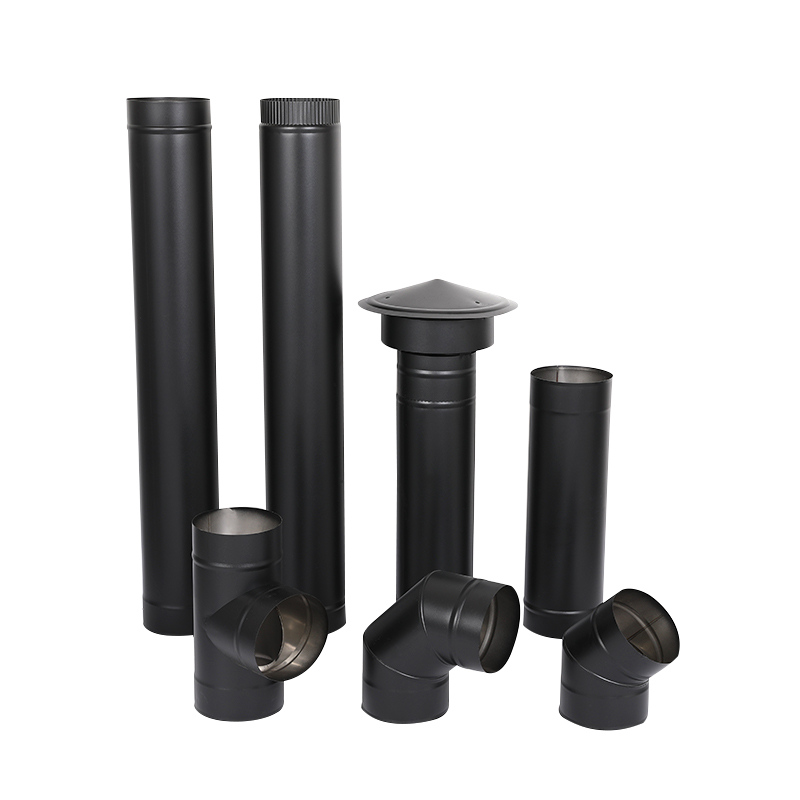
A single-wall chimney pipe is made from one layer of metal. It is usually lighter, simpler, and more cost-effective. It is commonly used for visible indoor stove pipe sections, short connections between a stove and the main chimney route, or applications where heat radiation into the room is acceptable.
Single-wall pipes are easier to handle and often provide a clean appearance for indoor installations. Black powder-coated versions are popular in modern stove rooms because they visually match wood stoves and pellet stoves.
However, single-wall pipe transfers heat more directly to its outer surface. This means it is not always suitable for passing through ceilings, roofs, walls, or areas close to heat-sensitive materials.
A double-wall chimney pipe uses two metal layers: an inner liner and an outer shell. Between them, there may be insulation material or an air space. This structure helps reduce external surface temperature, improve heat retention inside the flue, and support more stable draft.
Double-wall systems are often used where the flue passes through building structures, runs outdoors, or needs better thermal protection. For cold climates, long vertical runs, villas, cabins, and roof penetrations, double-wall insulated systems can provide stronger practical value.
Single-wall pipes release more heat into the surrounding area. In some indoor stove rooms, this may be acceptable or even useful. But when the flue is close to walls, ceilings, or furniture, heat transfer must be carefully managed.
Double-wall pipes provide better thermal separation. They help keep more heat inside the flue and reduce heat transfer to the outer surface. This is especially important when the chimney route moves through structural areas or exterior sections.
For buyers, this means single-wall pipes are often better for short indoor connections, while double-wall insulated pipes are more suitable for through-wall, through-roof, or exterior chimney routes.
Draft depends on temperature difference, flue height, route design, and air resistance. When flue gases cool too quickly, draft may weaken, and condensation may form. This can affect stove performance and increase maintenance needs.
Double-wall insulated flues help maintain higher internal flue temperature compared with exposed single-wall pipes. This can support more stable draft, especially in cold climates or long outdoor runs.
However, draft is also affected by system layout. Too many bends, long horizontal sections, poor termination design, or undersized pipe can still create problems, even with double-wall pipe.
Single-wall chimney pipe is generally more economical in material cost. It is suitable for simple connection sections and cost-sensitive applications.
Double-wall insulated chimney pipe costs more because it uses more material and more complex structure. However, it may reduce installation risk, improve safety margin, and create a more complete product solution for higher-end projects.
For distributors, this creates two market levels: single-wall systems for economical stove pipe applications and double-wall systems for more demanding chimney installations.
Single-wall black stove pipes are popular for visible indoor sections. They offer a minimal and modern look.
Double-wall stainless steel systems are often selected for professional installations where durability, insulation, outdoor weather resistance, and system completeness matter more.
Some customers want polished stainless steel; others prefer powder-coated black finishes. OEM buyers should choose finishes according to local market taste, stove style, and project positioning.
Single-wall and double-wall chimney pipes are not competitors; they are solutions for different parts of the heating system. Single-wall pipes offer simplicity, economy, and clean indoor appearance. Double-wall insulated pipes offer better thermal protection, draft support, and installation flexibility for demanding routes.
For buyers, the correct choice depends on the stove type, building structure, flue route, climate, safety requirements, and customer expectations. A complete stainless steel chimney system should use the right pipe in the right position, supported by compatible accessories and reliable manufacturing quality.
Tags:single wall chimney pipe, double wall chimney pipe, insulated chimney flue, stainless steel stove pipe, twin wall flue system










Copyright © 2026 Suzhou Ruilun Metal Products Co., Ltd. Keywords:Stainless Steel Chimney,Chimney Fireplace,Stainless Steel Chimney Parts


 You are here :